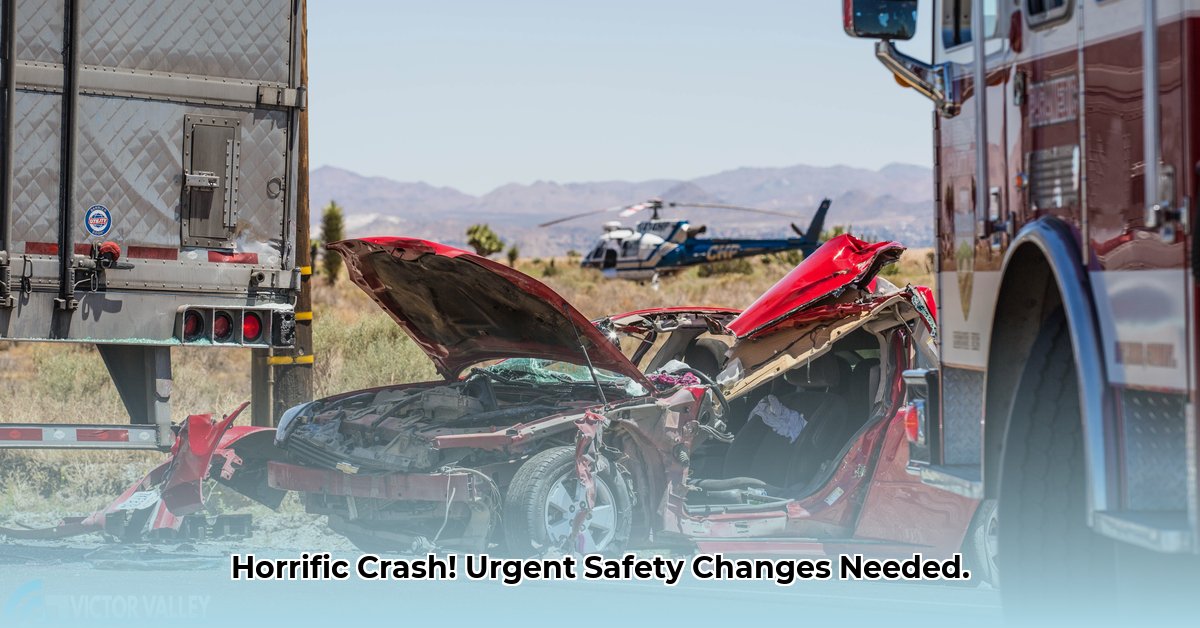
Two recent fatal crashes—one in Florida, the other in New York—starkly illustrate the urgent need for improved road safety measures. These accidents, involving passenger vehicles and tractor-trailers, highlight the devastating consequences of high-speed driving and wrong-way driving, underscoring the critical need for a multifaceted approach to preventing future tragedies. The sheer disparity in size and weight between a car and a semi-truck creates an inherently dangerous situation, leading to often catastrophic outcomes for smaller vehicles. For more information on similar accidents, see this report.
Florida: A High-Speed Tragedy
On the Florida Turnpike, a scene of typically bustling traffic transformed into a horrific accident. A Mercedes-Benz, traveling at excessive speed, lost control, resulting in a catastrophic collision with a semi-truck. The impact was immediate and devastating, leaving the smaller car crushed beneath the immense weight of the trailer. The driver perished at the scene. The Florida Highway Patrol's investigation concluded that excessive speed was the primary contributing factor, instantly transforming a routine drive into a preventable tragedy. How can we prevent similar incidents from occurring? This single accident underscores the urgent need for comprehensive safety improvements.
New York: A Wrong-Way Nightmare on Route 17
Shifting the focus to New York State, a different scenario unfolded on Route 17. A car, inexplicably traveling in the wrong direction, collided head-on with a tractor-trailer. The ensuing impact ignited a fierce fire, consuming both vehicles, resulting in another tragic loss of life. The New York State Police investigation is ongoing, still seeking to determine the cause of the wrong-way driving. Was impairment a factor? Was it a navigational error? Or was there another contributing element? The unanswered questions highlight the human cost of these accidents and the profound grief felt by the victim's family. What measures can be instituted to mitigate the risks associated with wrong-way driving? The answers are crucial for preventing future incidents.
A Deadly Commonality: The David and Goliath Problem
While the immediate circumstances differed—excessive speed in Florida, wrong-way driving in New York—both accidents share a chilling similarity: the significant size and weight difference between a passenger vehicle and a tractor-trailer. This inherent imbalance creates an extremely dangerous situation. In such collisions, passenger vehicles are overwhelmingly outmatched, leaving occupants vulnerable to catastrophic injuries or death. What technological solutions can help to bridge this vast safety gap between large vehicles and passenger cars? The stark reality demands immediate action.
What Can We Do? A Collaborative Approach to Safer Roads
These are not mere statistics; they represent real lives and families profoundly impacted by preventable tragedies. Mitigating the risk requires a comprehensive, multifaceted approach involving driver education, enhanced vehicle safety features, and improved road infrastructure. Let's explore actionable steps:
Enhanced Driver Education and Responsibility: More rigorous driver training programs are crucial, emphasizing safe driving practices around large vehicles, incorporating hands-on experience, and simulation exercises to highlight the inherent risks. Simultaneously, stricter speed enforcement is needed, potentially employing more police patrols, automated speed cameras, and targeted public awareness campaigns.
Technological Advancements and Vehicle Design: Widespread adoption of Advanced Driver-Assistance Systems (ADAS) is essential. These systems, including lane departure warnings, adaptive cruise control, and automatic emergency braking, must become standard in all new vehicles. Furthermore, vehicle design needs to evolve, focusing on creating stronger structural components and innovative safety systems to better withstand impacts from larger vehicles.
Trucking Industry and Governmental Initiatives: Trucking companies need to enhance driver monitoring systems to detect fatigue and distraction, adhering strictly to rest-break regulations, and implementing improved driver training programs, potentially using in-cab monitoring technology. Government agencies must concurrently invest in infrastructure improvements: enhanced road barriers, clearer signage, and strategic modifications to high-risk areas on heavily trafficked routes.
Risk Mitigation Matrix
| Strategy | Probability of Success | Impact on Risk Reduction | Risk Level (Post-Mitigation) |
|---|---|---|---|
| Enhanced Driver Education | High | High | Low |
| Improved ADAS | Medium | High | Medium |
| Road Infrastructure Upgrades | Medium | High | Medium |
| Autonomous Driving Tech | Low | Very High | High (but potential for future reduction) |
Note: The risk matrix reflects current estimations. Ongoing research and technological advancements may alter these probabilities and impact levels.
Conclusion: A Collaborative Effort to Save Lives
The risk of car crashes involving tractor-trailers is substantial, but not insurmountable. A collaborative effort between drivers, manufacturers, trucking companies, and governing bodies is crucial. By prioritizing road safety and implementing these preventative measures, we can significantly reduce—and potentially eliminate—future tragedies. This is not merely about statistics; it is about saving lives and protecting families. The cost of inaction is far too high.